Key Takeaways:
- Strategic Allocation: Manual beds offer cost-effective solutions for basic care and unstable power environments, while electric beds drastically reduce nursing workload and improve patient safety.
- The ROI of Electric Beds: Upgrading to electric models featuring our 240KG load capacity and whisper-quiet Jieshun motors significantly lowers long-term staff injury costs and boosts ward efficiency.
- Shared MDK Quality: Whether you choose manual or electric, all MDK hospital beds share the same heavy-duty carbon steel frame and advanced chemical pre-treatment for zero-compromise durability.
The Procurement Dilemma: Balancing Budget and Nursing Efficiency
When equipping a new healthcare facility or upgrading an existing ward, hospital administrators and medical distributors face a critical decision. Should you invest in traditional manual hospital beds, or upgrade to fully electric models?
While upfront costs are always a primary concern in B2B procurement, the true cost of medical equipment is measured over its entire lifecycle. The choice between manual and electric beds directly impacts daily nursing operations, patient recovery speed, and long-term maintenance budgets.
Here is a comprehensive breakdown to help your facility make the most strategic investment.
Manual Hospital Beds: Cost-Effective and Grid-Independent
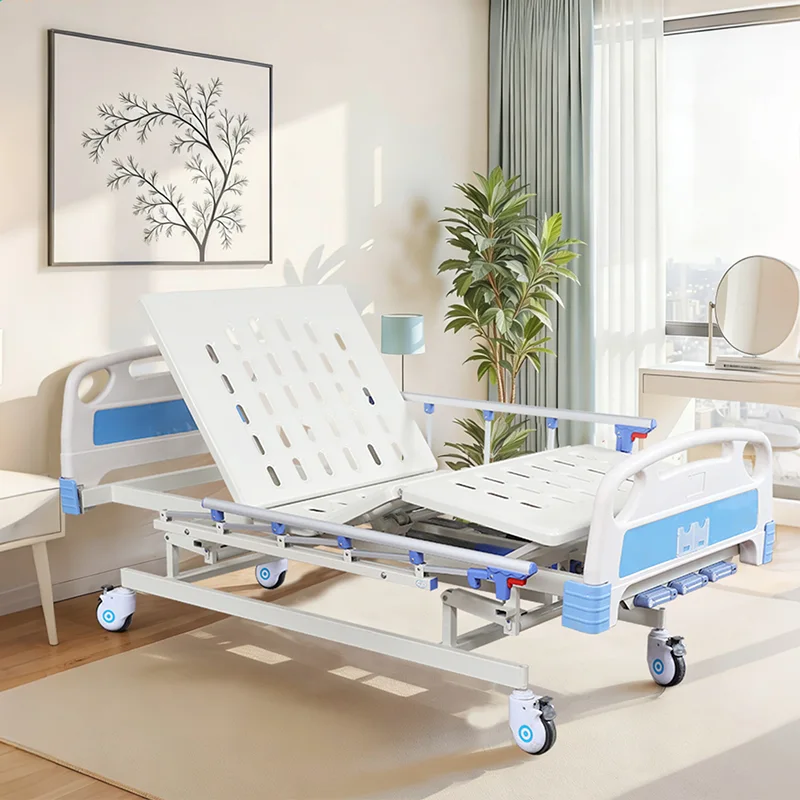
Manual hospital beds rely on physical hand cranks located at the foot or sides of the bed to adjust the backrest, knee elevation, and overall height.
For many regional clinics and distributors, manual beds remain a staple product. Their primary advantage is the lower initial procurement cost, making them ideal for large-scale deployments under tight budgets. Furthermore, manual beds do not require a power source. This makes them the ultimate reliable choice for field hospitals, emergency triage centers, or healthcare facilities in regions with unstable electricity grids.
However, the hidden cost of manual beds lies in human labor. Adjusting the bed requires significant physical effort from nursing staff. Over time, repetitive cranking can lead to fatigue and back strain among caregivers, potentially decreasing overall ward efficiency.
Electric Hospital Beds: The Standard for Modern Healthcare ROI
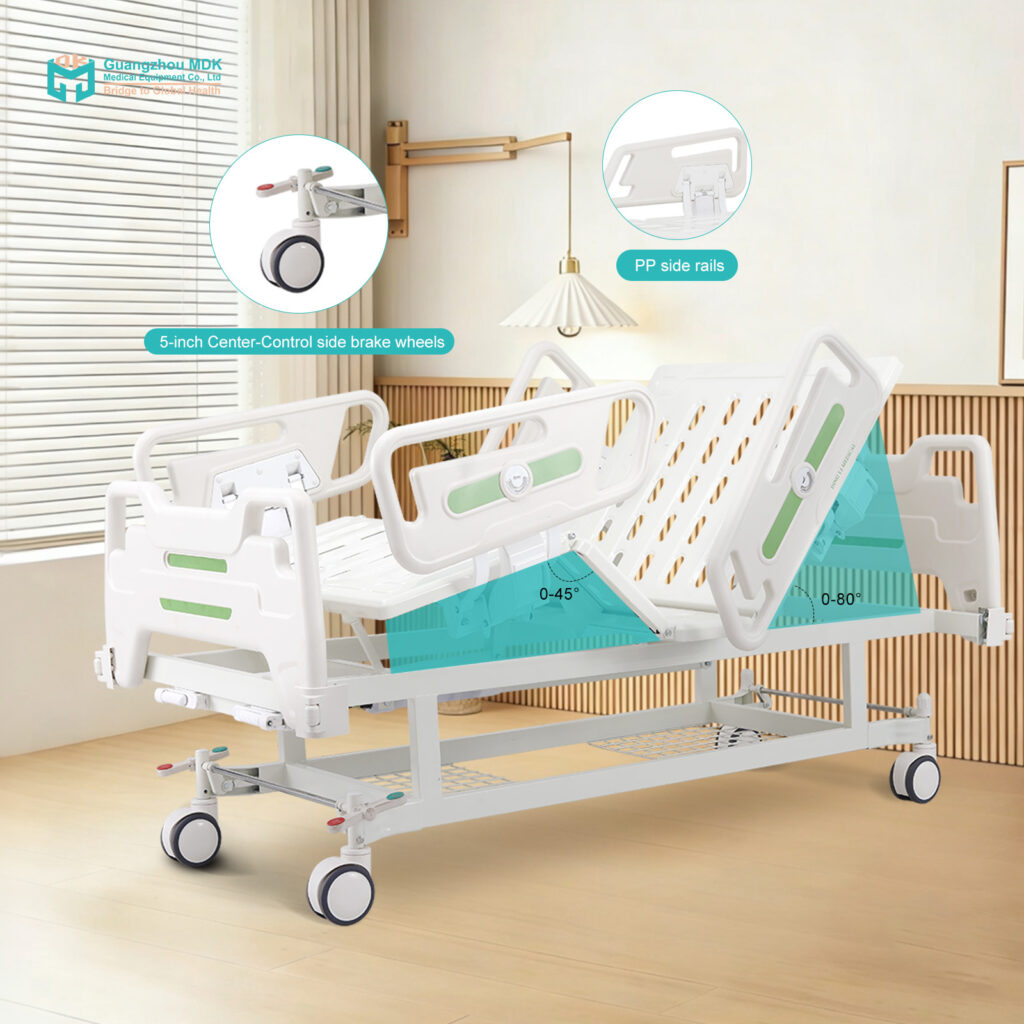
Electric hospital beds represent the modern standard for high-efficiency patient care. With the simple press of a button on a remote or control panel, patients and nurses can instantly adjust the bed profile.
For B2B buyers evaluating total Return on Investment, the electric bed offers massive operational advantages. By eliminating the physical strain of manual cranking, hospitals see a direct reduction in staff fatigue and workplace injuries. Furthermore, electric beds empower conscious patients to adjust their own positions, promoting patient dignity and freeing up valuable nursing time.
At MDK, our premium electric hospital beds are engineered for zero-disturbance performance. Powered by advanced Jieshun motors, the transitions are remarkably smooth and whisper-quiet. Combined with a heavy-duty one-piece stamped carbon steel surface, our electric models effortlessly support a maximum load of 240KG, ensuring ultimate safety for intensive care requirements.
Head-to-Head Comparison: Manual vs. 전기 같은
| Feature | MDK Manual Hospital Beds | MDK Electric Hospital Beds |
| Upfront Cost | Budget-friendly for bulk procurement | Higher initial investment |
| Nursing Workload | High physical effort required | Zero physical strain |
| Power Dependency | None. Perfect for off-grid use | Requires stable power source |
| Adjustment Speed | Slower mechanical cranking | Instant smooth motor control |
| Best Suited For | Basic care and temporary clinics | Premium hospitals and ICU wards |
The Hidden Factor: Manufacturing Quality Matters for Both
Whether you ultimately procure manual or electric beds, the structural foundation dictates the equipment’s lifespan. In the medical industry, the most common failure point for manual beds is a rusted mechanical crank, while poorly made electric beds suffer from unstable frames.
MDK eliminates these risks entirely across our entire product line. Every single carbon steel component—whether on a manual crank mechanism or an electric bed frame—undergoes our proprietary multi-stage chemical pre-treatment. This advanced chemical wash strips raw steel of microscopic impurities and fuses the powder coating at a molecular level. The result is unparalleled resistance to rust and chemical cleaners, ensuring your investment outlasts standard industry alternatives.
Frequently Asked Questions
Q: Can MDK supply a mixed order of manual and electric beds for a hospital project?
A: Yes. We frequently work with global medical distributors and hospital administrators to customize bulk orders. You can allocate electric beds for high-dependency wards and manual beds for general recovery rooms to optimize your budget.
Q: Are the mechanical cranks on MDK manual beds durable?
A: Absolutely. Our manual cranks are engineered from heavy-duty steel and treated with our advanced anti-corrosion chemical wash. They are designed for smooth rotation and engineered to prevent the seizing and rusting common in standard market alternatives.
Build a Resilient Healthcare Supply Chain with MDK
Selecting the right medical equipment requires balancing immediate budgets with long-term operational efficiency. Whether your market demands the rugged independence of our manual beds or the advanced nursing efficiency of our 5-function electric models, MDK delivers uncompromised manufacturing excellence.
With full CE marks, FDA registration, and ISO-certified facilities, MDK is your trusted source for hospital-grade reliability.
Explore our complete manual and electric hospital bed catalogs here [hospital bed], or contact our B2B procurement team [here] to discuss wholesale pricing and project solutions.