Key Takeaways:
- Freight Optimization is Crucial: The factory price of a hospital bed is only a fraction of the total cost. Smart modular packaging maximizes container space, drastically reducing the per-unit shipping cost.
- Compliance Prevents Disasters: Lacking proper CE or FDA documentation can lead to seized shipments and exorbitant customs storage fees. Partnering with a fully certified manufacturer is non-negotiable.
- Durability Equals Profit: Investing in heavy-duty frames with advanced anti-rust treatments eliminates future replacement costs and protects your long-term return on investment.
Beyond the Factory Price: The Real Cost of Medical Sourcing
When sourcing medical equipment globally, many procurement managers and distributors focus entirely on the initial unit price. A low quote from a manufacturer might look attractive on a spreadsheet. However, seasoned B2B buyers know that the factory price is just the beginning of the procurement journey.
Importing heavy medical equipment involves a complex web of logistics, regulatory hurdles, and long-term maintenance considerations. If these variables are not carefully managed, the hidden costs can quickly wipe out your profit margins and disrupt hospital operations.
Here is a breakdown of the three major hidden costs of importing hospital beds and how strategic sourcing can protect your bottom line.
Hidden Cost 1: Inefficient Packaging and Wasted Freight Space
Hospital beds are bulky and heavy. In international maritime shipping, you pay for the space you occupy. If a manufacturer ships fully assembled beds or uses inefficient packaging, you end up paying to ship empty air.
When a 40HQ container is poorly loaded, the freight cost per bed skyrockets. This is where manufacturing expertise meets logistics optimization.
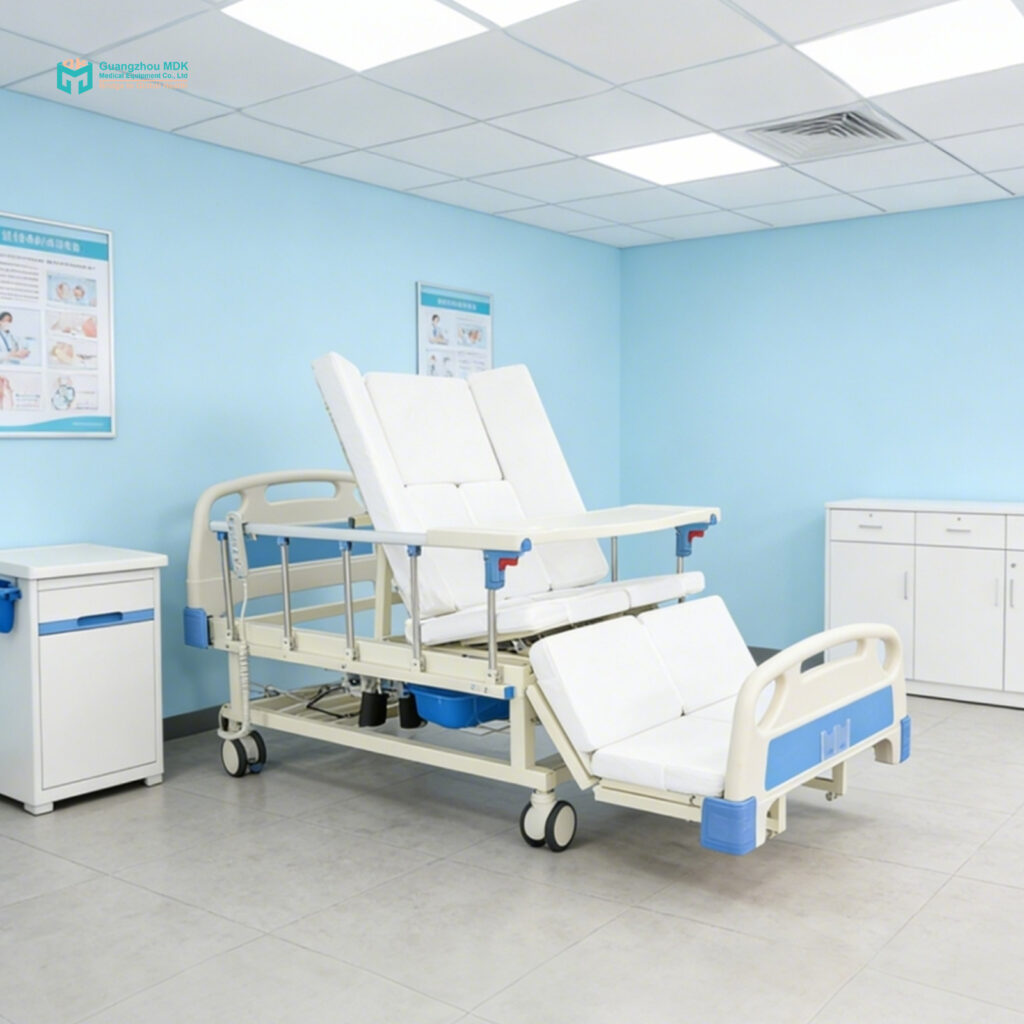
At MDK, we engineer our 5-function electric beds and manual beds with optimal knock-down modular designs. This strategic approach allows us to pack the heavy-duty carbon steel frames, Jieshun motors, and PP headboards compactly without risking transit damage. By maximizing the exact loading capacity of a standard shipping container, we drastically drive down your per-unit landed cost, giving your distribution business a massive competitive edge in local markets.
Hidden Cost 2: Customs Delays and Compliance Penalties
The global healthcare market is heavily regulated. Customs officials in North America, Europe, and emerging markets strictly enforce medical device compliance.
If your imported hospital beds arrive at a port without the correct certification, the consequences are severe. Shipments can be held for weeks, incurring daily port storage penalties, or worse, completely rejected and destroyed. The financial loss and the damage to your reputation with local hospital clients can be devastating.
Securing your supply chain means sourcing exclusively from a compliant manufacturer. MDK eliminates regulatory friction. Our manufacturing facilities operate under strict ISO quality management systems. Every heavy-duty hospital bed we export comes with full CE marking and FDA registration documentation. We provide our global partners with immediate, transparent access to all compliance paperwork, ensuring a smooth and rapid customs clearance process every single time.
Hidden Cost 3: Premature Rust and Replacement Rates
The final hidden cost reveals itself months after the beds have been deployed in a ward. Cheaply manufactured hospital beds often feature thin steel and basic surface paint. Under the rigorous cleaning protocols of modern hospitals, these beds quickly succumb to chemical corrosion and rust.
A rusted bed frame compromises patient safety and must be pulled from service. The cost of replacing equipment prematurely destroys the initial savings of a cheap factory quote.
True Return on Investment is measured in decades of service. MDK beds are built to last. Our signature one-piece stamped carbon steel frames safely handle a 240KG maximum load. More importantly, every steel component undergoes a rigorous multi-stage chemical wash. This pickling and phosphating process creates a rust-proof barrier at the molecular level, ensuring the bed withstands extreme environments and harsh disinfectants.
The True Cost Comparison Matrix
| Procurement Factor | Low-Cost Standard Supplier | MDK Strategic Partnership |
| Shipping Efficiency | Poor space utilization | Optimized modular packaging |
| Customs Risk | High risk of port delays | Zero risk via FDA and CE compliance |
| Lifespan and Rust | High replacement frequency | Extreme durability via chemical wash |
| Total ROI | Decreases over time | Maximized long-term profitability |
Protect Your Margins with MDK
Importing hospital beds does not have to be a gamble. By partnering with a manufacturer that understands the intricacies of international freight, regulatory compliance, and heavy-duty engineering, you can secure your supply chain and maximize your profitability.
Review our globally compliant hospital bed catalog here [Products], or reach out to our B2B logistics and procurement team [Contact us] for a comprehensive shipping and pricing consultation.