Key Takeaways:
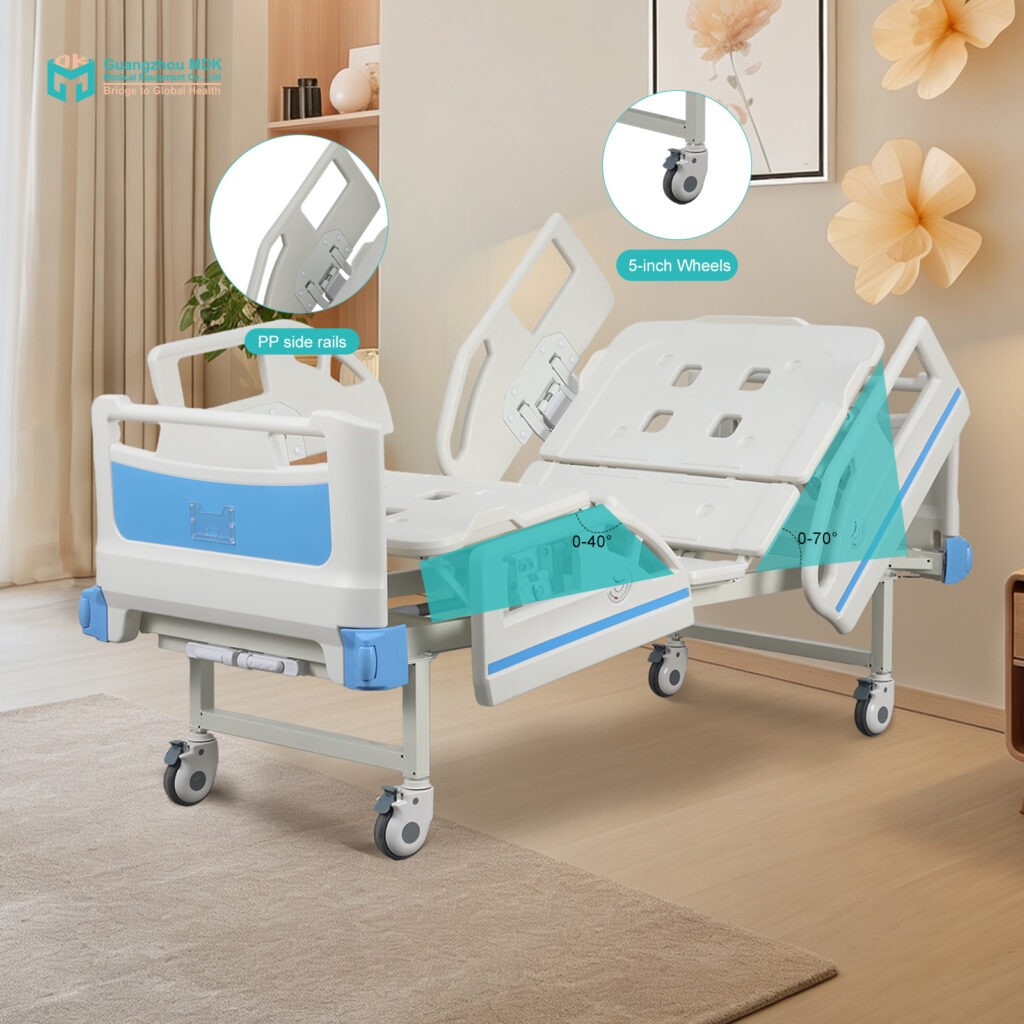
- Mobility is Critical: A hospital bed is not just a resting platform; it is a vital transport vehicle during medical emergencies. The quality of its casters defines patient safety.
- Independent Brakes (Cost-Effective): Ideal for general wards and long-term care where beds remain stationary, offering basic stability at a highly economical price point.
- Central Locking Systems (The ICU Standard): Mandatory for intensive care and emergency departments, allowing nurses to lock all four wheels instantly with a single pedal press, ensuring zero delay during critical procedures.
The Overlooked Component in Medical Procurement
When medical distributors analyze the specifications of a 5-function electric hospital bed, they heavily scrutinize the motor brand, the steel thickness, and the overall weight capacity. However, one of the most critical components is often treated as an afterthought: the hospital bed casters.
In a clinical environment, a hospital bed frequently transforms into an emergency transport stretcher. When a patient goes into cardiac arrest or requires immediate surgery, nurses must move the bed rapidly down crowded corridors. In these high-stakes moments, the maneuverability and stopping power of the bed’s casters are matters of life and death.
As procurement standards tighten globally for 2027 hospital tenders, understanding the exact differences between Independent Braking Casters and Central Locking Systems is essential for securing your next major contract.
Independent Braking Casters: The Economical Baseline
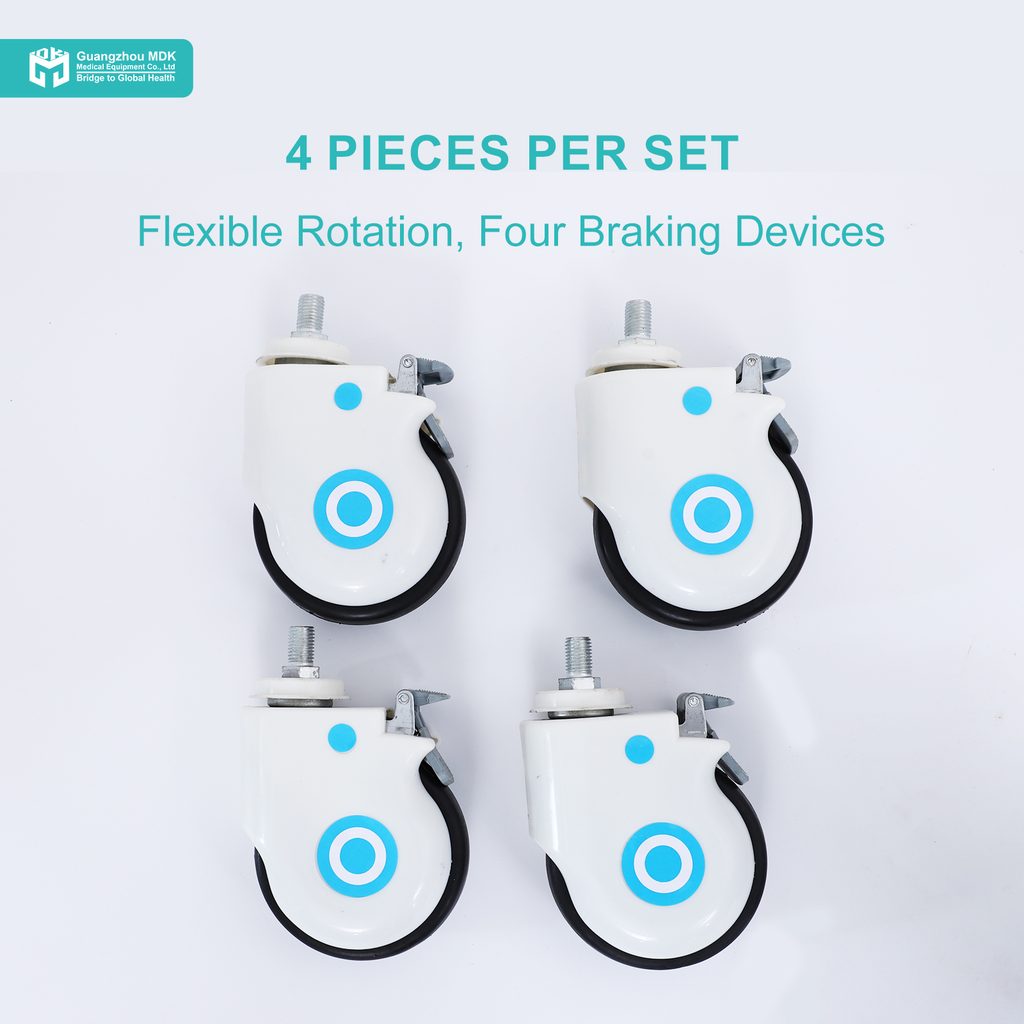
Independent braking casters feature a manual lock on each individual wheel. To fully secure the bed, a nurse must walk around the bed and physically press down the brake pedal on at least two (diagonally opposed) or all four casters.
The Clinical Reality:
- Advantages: These casters are structurally simple, extremely durable, and highly cost-effective. They significantly lower the overall production cost of the bed, making them an excellent choice for budget-conscious procurement.
- Limitations: In an emergency, walking around the bed to lock individual wheels wastes precious seconds. Furthermore, nurses often suffer from foot fatigue when constantly engaging and disengaging stiff manual brakes.
- Best Application: Standard 2-function manual beds, nursing homes, outpatient recovery rooms, and general wards where the bed acts primarily as stationary medical furniture.
Central Locking Systems: The Ultimate Emergency Standard
A Central Locking System connects all four casters via a concealed mechanical linkage rod running through the base frame of the bed. It is operated by a single, large foot pedal usually located at the foot or side of the bed.
The Clinical Reality:
- Instant Lockdown: With a single step on the master pedal, all four wheels are locked simultaneously. This zero-delay immobilization provides absolute stability during aggressive CPR procedures or sudden patient transfers.
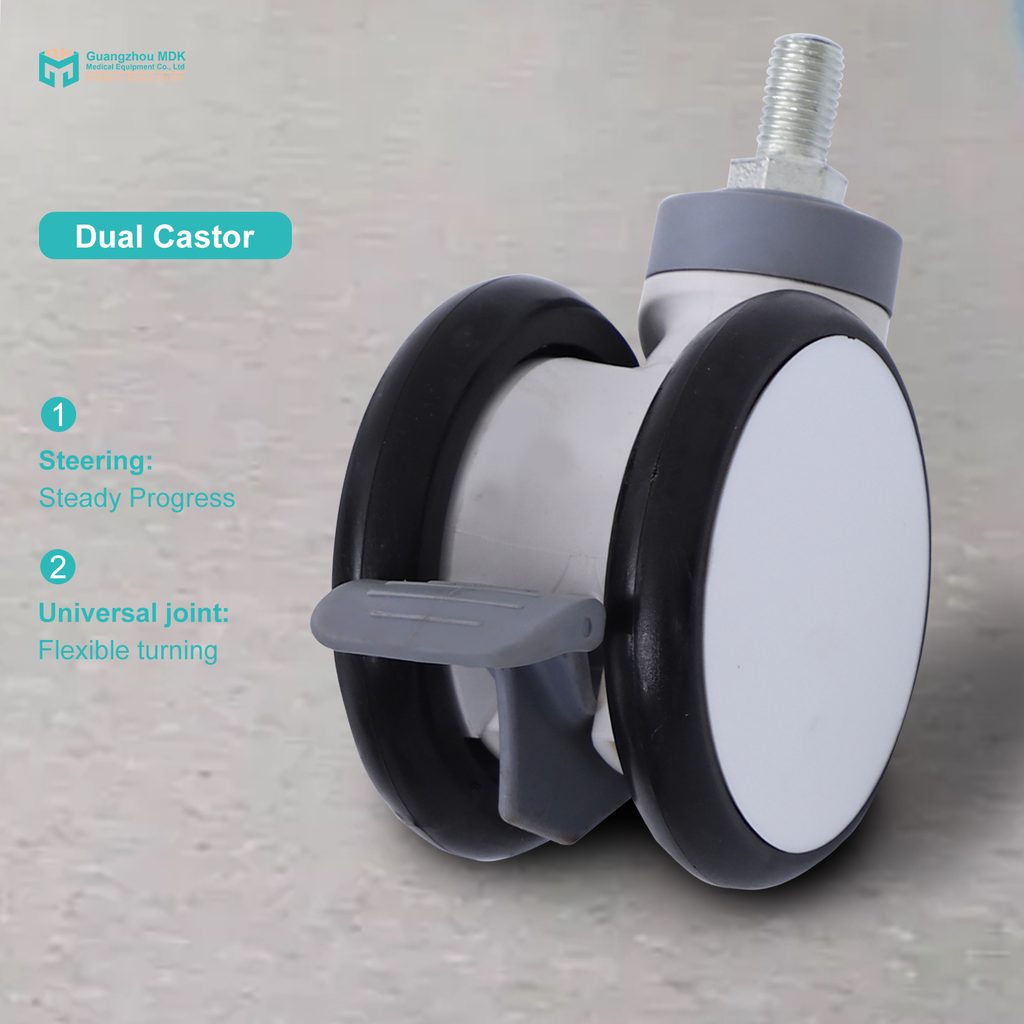
- Directional Steering: Premium central locking systems feature a three-stage pedal. Aside from “Free” Und “Locked,” the third stage engages a directional lock. This aligns the front casters in a straight line, allowing a single nurse to steer a heavy 240KG bed down a straight hallway effortlessly, preventing the bed from drifting sideways.
- Best Application: 3-function and 5-function electric beds deployed in Intensive Care Units (ICUs), emergency rooms, operating theaters, and high-dependency trauma centers.
Securing Your Next Hospital Tender
Modern government health ministries and premium private hospitals are rapidly updating their procurement requirements. Heute, a tender document for ICU or high-dependency ward beds will almost explicitly demand a Central Locking System. Supplying a bed with independent brakes for these specific tenders will result in immediate technical disqualification.
At MDK, we engineer our clinical solutions to match exact ward requirements. Whether you require our heavy-duty manual beds equipped with silent independent casters, or our flagship 5-function electric beds featuring premium central locking systems, we guarantee smooth, frictionless mobility and absolute stationary security.
Ensure your bid meets the highest clinical standards. Review our technical specifications in our Product Catalog, or consult our engineering team via the Kontaktieren Sie uns page to select the optimal caster configuration for your upcoming hospital project.